
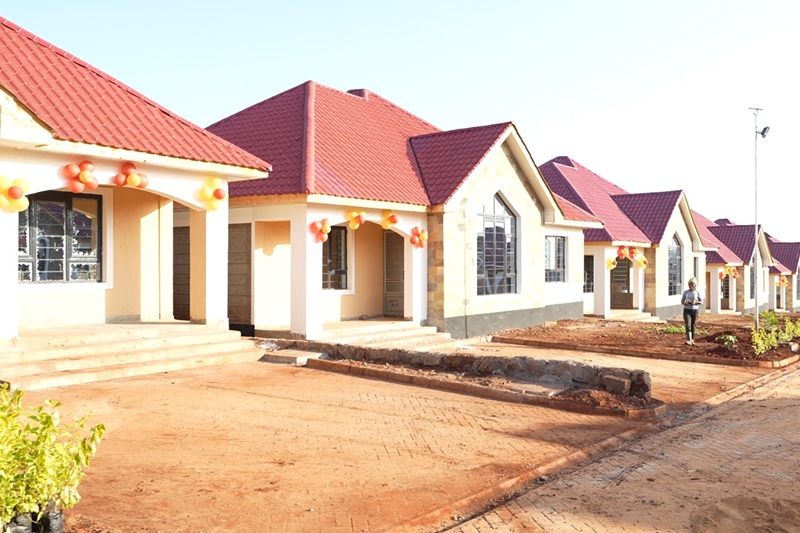
Let’s be honest: the phrase “bei ya sementi imepanda” (the price of cement has gone up) is almost a national anthem in Kenya. If you’ve ever sat in a matatu or a local butchery, you’ve probably heard someone narrating their “mjengo” (construction) woes. One day you have a budget for a mansion, the next day you’re wondering if you can afford the gate!
At Durar, we know that building a home is likely the biggest investment you’ll ever make. But “cheap” doesn’t have to mean “low quality.” In 2026, the smartest builders aren’t those with the most money—they’re the ones who build wise.
If you’re looking to squeeze the most out of every shilling, here is the real breakdown on the cheapest way to build in Kenya today.
1. Simplify the Design (Wacha Maridadi Nyingi)
The easiest way to lose money is to fall in love with a complicated floor plan. Every time you add a corner, a curve, or a complex roof “valley,” you are adding thousands to your bill.
The cheapest shape to build is a simple rectangle or square. Why? Because it minimizes the amount of walling and roofing material needed. A 3-bedroom house with a “box” design and a simple gable roof can save you up to 20% compared to a “fancy” design with multiple levels and hips.
Think of it like this: every “fold” in your roof is another place for a leak to happen and another reason for your fundi to ask for more money. Keep it clean, keep it functional.
2. Embrace Interlocking Bricks (The ISSB Revolution)
If you are still using the standard “mawe ya mjengo” (quarry stones) for everything, you might be overspending. Interlocking Stabilized Soil Blocks (ISSB) are a game-changer in 2026.
These blocks are made using soil from your site mixed with a little cement. Because they interlock like Lego pieces, you use way less cement for mortar and almost no plastering on the exterior. They also look incredibly stylish with a natural, earthy finish.
If ISSB isn’t your thing, look into EPS (Expanded Polystyrene) panels. They might seem “expensive” per square meter initially, but they are so light and fast to install that you save a fortune on labor and foundation costs.
3. The “Labor-Only” vs. “Turnkey” Debate
In Kenya, many people prefer to buy their own materials and just hire a fundi for labor. While this feels cheaper because you control the cash, it often leads to “leakage”—where bags of cement mysteriously grow legs and walk off the site at night.
The cheapest way to manage labor in 2026 is a strictly supervised labor-only contract with a trusted foreman, or better yet, a small firm like Durar that handles the headache for you.
If you decide to do it yourself, you must be on-site. As they say, “Macho ya mwenye mradi ndiyo hunenepesha ng’ombe.” (The owner’s eyes fatten the cow). If you aren’t there to count the bags, you are basically donating to the fundi’s next side hustle.
4. Buy in Bulk and Source Locally
Don’t buy 10 bags of cement today and 5 bags next week. You’ll spend half your budget on the “probox” or “pickup” transport costs.
In 2026, sand and ballast are expensive. If you’re building in a place like Machakos or Kajiado, source your stones from the nearest quarry. If you’re at the Coast, use coral stones. Using what is “hapa tu” (right here) saves you the KES 30,000 to KES 50,000 transport fee that lorries charge for long distances.
5. Build in Phases (Incremental Building)
Kenyans are the kings of “pole pole” (slowly but surely). There is no shame in building the foundation and the slab this year, then waiting six months to do the walling.
This is the cheapest way because it keeps you debt-free. Instead of taking a huge bank loan with 18% interest that will make you lose sleep, build as you earn. At Durar, we often help clients design “expandable” houses—you start with a solid 1-bedroom unit that has the “bones” to become a 4-bedroom villa later.
6. The “Hidden” Savings: Finishes
This is where the budget usually dies. You don’t need imported Italian marble in 2026. Kenya has amazing local ceramic tiles that look just as good for a fraction of the price.
For the “wet areas” like the kitchen and bathroom, spend a bit more. For the bedrooms? A clean, well-done polished cement floor (terrazzo style or colored screed) is incredibly trendy right now, very durable, and much cheaper than tiling.
The Durar Advantage
We know the Kenyan “mjengo” scene can be a jungle. Between rogue fundis and overpriced hardware stores, it’s easy to get discouraged.
At Durar, we believe that everyone deserves a dignified home, regardless of their budget. We help you with Value Engineering—looking at your plan and telling you exactly where you can cut costs without the house falling down or looking “cheap.”
Ready to build without the drama? Whether you have KES 500,000 to start your foundation or a full budget for a bungalow, let’s talk. We’ll show you how to get that “City House” look with “Village” prices.
Which part of the build are you most worried about—the foundation or the finishes? Let’s figure it out together!