
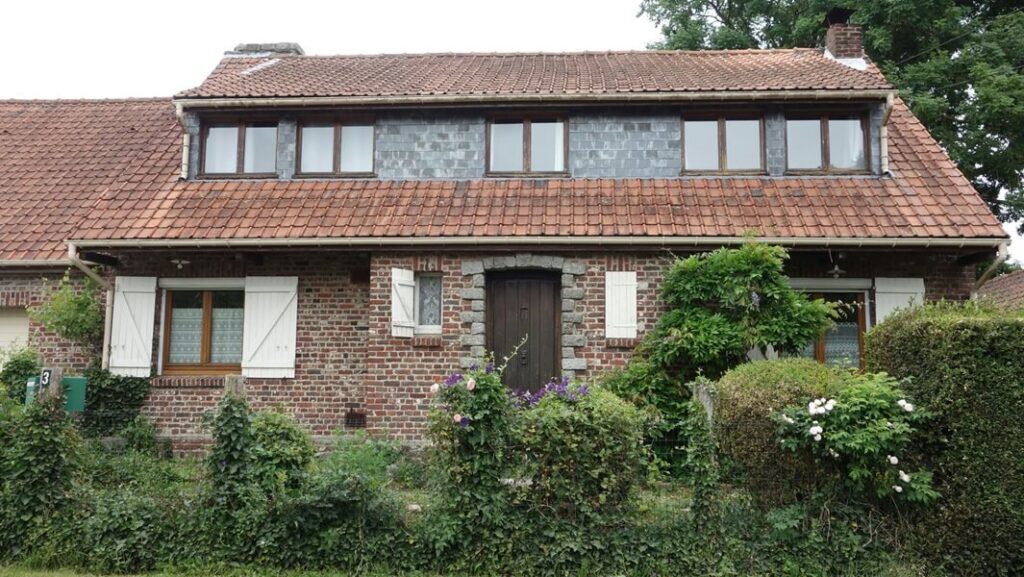
We’ve all seen it. You’re driving through an old neighborhood in Nairobi like Upper Hill or maybe you’re back in the village visiting “shosho.” You see a house built in the 1960s—maybe even earlier. The paint might be peeling and the windows look old-fashioned, but the walls? They are solid. No cracks, no dampness, just pure strength.
Then, you look at a house built just three years ago in a new estate. The walls are already showing “maps” of dampness, the floor is cracking, and the owner is constantly calling a fundi for “repairs.”
It makes you wonder: In this era of “haraka haraka” and cheap materials, what type of construction actually stands the test of time? If you want to build a house that your grandkids will still be fighting over in sixty years, what should you choose?
At Durar, we don’t just build for today; we build for generations. Let’s look at what makes a Kenyan house truly “indestructible.”
1. The Undisputed King: Natural Stone Masonry
In Kenya, “mawe ya quarry” (natural stone) is still the gold standard for a reason. Whether it’s the blue stone from Ndarugo or the yellow stone from various parts of the Rift, natural stone is incredibly durable.
Why does it last? Stone is dense. It handles the Kenyan sun and the heavy rains of April without breaking a sweat. Unlike some modern blocks that can crumble if they aren’t cured properly, a well-set stone wall is basically a fortress.
The Anecdote: Think of the old colonial-era houses in Muthaiga or the stone churches in the village. They don’t use fancy chemicals; they just used solid stone and good mortar. If you want a 100-year house, stone is your best friend.
2. Reinforced Concrete Frame (The Skeleton)
If you are planning to go “ghorofa” (multi-story), the secret to longevity isn’t the walls—it’s the reinforced concrete frame. This is the “skeleton” of columns and beams that holds the weight.
A house with a strong RC frame is like a person with a healthy spine. Even if the “skin” (the paint or plaster) gets old, the structure remains safe. In 2026, we are seeing more people use high-quality T-ribbed steel bars and ready-mix concrete to ensure there are no air pockets in the columns.
When the “skeleton” is done right, the house can withstand minor earth tremors and the heavy vibrations of nearby road construction—things that make “cheap” houses crack like eggs.
3. Interlocking Stabilized Soil Blocks (ISSB): The Modern Survivor
There’s a myth that “soil” houses don’t last. But have you seen the ISSB technology lately? These blocks are compressed with a small amount of cement and are actually harder than some of the “mabofree” (low quality) concrete blocks you see in the “mjengo” next door.
The beauty of ISSB is that it breathes. It handles temperature changes well, which prevents the internal “stress cracks” that often plague modern buildings. Plus, termites—the ultimate “house-eaters” in Kenya—have no interest in them.
4. The “Silent Killer” of Longevity: Dampness
You can use the most expensive stones in Kenya, but if you skip the Damp Proof Course (DPC), your house will start “dying” within five years.
You’ve seen it—those dark patches at the bottom of walls that make the paint peel off. That’s water “climbing” up from the ground. It rots the structure from the inside out. A house that lasts the longest is one where the builder was obsessed with waterproofing. At Durar, we tell our clients: “Don’t save money on the DPC. It’s the raincoat for your house.”
5. The Roof: Don’t Let it Leak!
A house is only as good as its roof. Once water enters the ceiling, it starts eating the timber and rusting the steel in your slabs.
In the past, heavy clay tiles were the “forever” choice. Today, high-quality stone-coated steel tiles (like Decra) offer the same longevity without the heavy weight that can stress your walls over time. If you want your house to last, you need a roof that can handle a Kenyan hailstorm without flinching.
6. Workmanship: The “Fundi” Factor
You can buy the best materials, but if “Fundi Njoroge” adds too much sand to the cement ratio to save some money for a “ka-quarter” at the local pub, that house won’t last.
Longevity comes from precision. It’s about the right ratio of cement, sand, and ballast. It’s about letting the concrete cure (stay wet) for the full 21 days instead of rushing to finish. A house built with “patience” is a house that stays standing.
The Durar Philosophy: Built to Last
At Durar, we don’t believe in “temporary” solutions. We know that for many Kenyans, this house is your “retirement plan” or your “legacy.”
When we design and supervise a project, we look at the soil, the climate of the area (is it salty like Mombasa or chilly like Limuru?), and the best materials available locally. We combine the “old school” strength of stone with modern engineering to give you a home that stays beautiful and safe for decades.
Looking to build a legacy, not just a house? Let’s sit down and look at your plans. We’ll show you where to invest in “strength” so you never have to worry about cracks or dampness again. Your grandkids will thank you later!
What’s your priority: A house that looks modern today, or one that’s still solid in 50 years? Let’s talk below!